

Indigo Sarees: The Timeless Blue That Weaves Heritage, Sustainability & Modern Elegance

Indigo is not just a color. It is a story — of civilizations, craftsmanship, rebellion, sustainability, and timeless beauty. Today, Indigo sarees are enjoying a spectacular revival among modern Indian women and youth who value authenticity, sustainability, and heritage aesthetics. Let’s explore the fascinating journey of Indigo sarees — from ancient dye vats to contemporary fashion statements — and why they remain one of the most graceful drapes a woman can wear.
⸻
The Ancient Origin of Indigo — A Colour Born in History
The history of indigo dye stretches back thousands of years, making it one of humanity’s oldest known dyes. Archaeological evidence shows indigo-dyed textiles existed as early as 4000 BC, and ancient civilizations across Asia, Africa, and the Americas used it widely.
India, however, played a defining role in indigo’s global identity. The dye’s very name comes from the Greek word “indikon,” meaning “Indian dye,” highlighting how strongly the color was associated with India in ancient trade.
For centuries, India was a primary supplier of indigo to Europe and the Mediterranean world, where it was considered a luxury pigment used not only for textiles but also for painting and cosmetics.
Recent archaeological research continues to validate India’s deep indigo legacy.
A 2026 study from Tamil Nadu’s Keeladi excavation site found evidence that Sangam-era weavers used plant-based pigments such as indigo, proving that sophisticated dyeing technology existed in ancient India.
⸻
Indigo in Indian Culture & Textile Traditions
Indigo became deeply woven into India’s cultural fabric — literally and symbolically. Regions like Bengal, Rajasthan, Gujarat, Andhra Pradesh, and Tamil Nadu historically cultivated indigo plants and developed regional dyeing techniques.
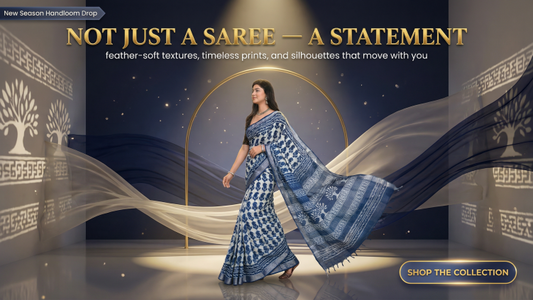
Traditional crafts such as Dabu printing, a centuries-old resist printing method from Rajasthan, rely heavily on natural indigo dyes. This craft uses clay, lime, and natural ingredients to create patterns before dyeing fabric in indigo baths, producing rich layered designs.
Similarly, traditional tie-dye techniques like Leheriya often use indigo as a final dyeing stage, creating dramatic wave or checkered patterns.
Through such crafts, indigo became synonymous with Indian heritage textiles, making it a natural fit for sarees — India’s most iconic garment.
⸻
How Natural Indigo Dye Is Made — The Science Behind the Blue
The beauty of an Indigo saree lies in its dye, which is extracted from the leaves of plants such as Indigofera tinctoria, commonly called “true indigo.”
The traditional process is both chemical and artistic:
Step-by-Step Traditional Dye Process
1. Leaves are harvested and soaked in water.
2. They ferment, converting a natural compound called indican into blue pigment.
3. The liquid is treated with an alkaline substance such as lye.
4. The pigment precipitates out and is collected as dye.
When fabric is dipped into this solution, it appears yellow-green at first and turns deep blue only after exposure to air — a magical transformation that artisans have mastered for centuries.
Unlike many dyes, indigo is a substantive dye, meaning it adheres naturally to fibers without needing a chemical binding agent.
⸻
Natural vs Synthetic Indigo — A Story of Revival
In the late 19th century, synthetic indigo was developed and quickly dominated global production. By 1914, natural indigo accounted for only about 4 percent of usage worldwide.
Yet today, natural indigo is experiencing a revival, especially in artisan and sustainable fashion circles. Designers and textile houses are rediscovering its eco-friendly properties and unique tonal depth.
Modern fashion increasingly values authenticity, sustainability, and hand craftsmanship — all qualities embodied by natural indigo textiles.
⸻
Why Indigo Sarees Are So Popular Among Modern Women
1. Aesthetic Versatility
Indigo shades range from soft sky blue to intense midnight hues, making them suitable for office wear, festive looks, and even fusion styling.
2. Timeless Minimalism
Unlike bright colors that trend temporarily, indigo’s deep blue is timeless, elegant, and universally flattering across skin tones.
3. Sustainable Fashion Appeal
Natural indigo is plant-based and biodegradable, making it attractive to eco-conscious buyers seeking alternatives to chemical dyes.
4. Cultural Authenticity
Today’s youth increasingly value clothing with a story. Indigo sarees represent heritage craftsmanship rather than mass-produced fashion.
5. Designer Adaptations
Contemporary designers are blending indigo with modern silhouettes, fabrics, and prints to suit urban lifestyles while retaining traditional charm.
⸻
Comfort & Grace — Why Indigo Sarees Feel As Good As They Look
Indigo sarees are often crafted in breathable fabrics such as cotton, mulmul, linen, and handloom weaves. These fabrics:
• Allow airflow and reduce heat retention
• Feel soft against the skin
• Absorb moisture effectively
• Provide day-long comfort
Because natural indigo binds gently with fibers, it typically results in softer textures compared to chemical dyes.
The result is a saree that drapes beautifully, moves effortlessly, and maintains an understated sophistication — perfect for modern women balancing style and practicality.
⸻
The Craftsmanship Behind Every Indigo Saree
Creating an Indigo saree is a labor-intensive process that involves multiple stages:
• Yarn preparation
• Washing and bleaching
• Dye vat preparation
• Multiple dips in dye solution
• Drying and oxidation cycles
• Final washing and finishing
Traditional artisans often dip fabric repeatedly to achieve deep shades, sometimes dozens of times. This layered dyeing gives indigo textiles their signature depth and richness.
Each saree therefore becomes a unique work of art rather than a mass-produced product.
⸻
Indigo Sarees as a Fashion Statement in Contemporary India
Today’s fashion landscape is witnessing a remarkable fusion of tradition and modernity. Urban women are pairing indigo sarees with:
• Statement silver jewellery
• Belted drapes
• Contemporary blouses
• Sneakers or boots
• Layered jackets
This adaptability makes indigo sarees a favorite among fashion-forward youth, influencers, and working professionals alike.
They are equally popular for:
• Office wear
• Brunch outings
• College functions
• Cultural events
• Minimalist festive styling
The modern appeal lies in the fact that indigo sarees offer both heritage and trendiness in a single garment.
⸻
A Story of Blue — Where Heritage Meets Fashionpur
Imagine a woman preparing for an important day — perhaps a presentation, a celebration, or a quiet evening gathering. She opens her wardrobe and chooses a deep indigo saree. As she drapes it, she isn’t just wearing fabric. She is wearing centuries of craftsmanship, the wisdom of artisans, the fragrance of natural dye vats, and the poetry of Indian tradition.
That is the essence of a high-quality Indigo saree.
At Fashionpur, Indigo sarees are curated with this very philosophy — blending tradition, comfort, and contemporary style. Each piece reflects:
• Authentic dyeing traditions
• Premium breathable fabrics
• Elegant drapes
• Modern styling compatibility
Fashionpur’s Indigo collection is designed for women who want to wear culture with confidence — women who believe fashion should be meaningful, graceful, and timeless.
⸻
The Emotional Power of Indigo
Blue is psychologically associated with calmness, trust, intelligence, and depth. Indigo, being a deeper shade of blue, carries an even stronger emotional resonance. It symbolizes wisdom, serenity, and quiet strength — qualities that resonate deeply with modern Indian women.
Perhaps this is why Indigo sarees never truly go out of style. They don’t shout for attention; they command it effortlessly.
⸻
Final Thoughts
Indigo sarees are more than garments — they are living heritage. From ancient dye vats to modern runways, from Sangam-era weavers to contemporary designers, indigo has travelled through time while retaining its mystique.
It represents sustainability in a world craving conscious fashion, tradition in an era of fast trends, and elegance in a culture that values grace.
For modern women who want style with substance, comfort with culture, and beauty with meaning, the Indigo saree remains unmatched.
And when you choose a finely crafted Indigo saree from Fashionpur, you don’t just wear a saree — you wear history dyed in blue.